
Detonators go surface-mount
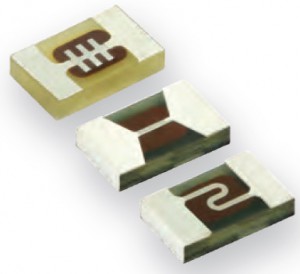
Vishay has introduced the ‘massive electro-pyrotechnic initiator chip’ (MEPIC) – a 0805 SMD resistor for what is sometimes known as electronic detonation or digital blasting.
“It has very predictable, reproducible and reliable behaviour and meets USCAR and AKLV16,” said Farnell, which is stocking the device. “MEPIC can be adapted for use with various pyrotechnic materials for applications such as mining detonators, fireworks, electric matches and civil detonators for demolition.”
MEPICs are available from 1 to 8Ω, with firing down to 1.5mJ or 250μs.
They have been designed to offer an alternative to ‘bridge wire’ technology, with the same performance and allowing alternative assembly process and initiator designs.
Initiator manufacturers are expected to apply a primary pyrotechnic material (usually wet primer followed by drying) to the working area of the device. “The geometry of the active area of the MEPIC, and both the primer chemistry and its impregnation method, will determine the global performances,” said Vishay, adding that an initiator must be used as the grain size of explosive powder does not ensure intimate direct contact for reproducible reliable performance.
‘All fire’ – where most energy is transferred to the primer – and ‘no-fire’ – where ignition is not initiated despite EMC and test current – must be established between the customer and Vishay.
Special soldering requirements are provided in the data sheet.
Super 12
MEPIC is part of Vishay’s Super 12 – an interesting marketing initiative that highlights six semiconductors and six passives that stand-out amongst their peers.
Another member of this year’s Super 12 is Si7157DP – a p-channel mosfet with the “lowest on-resistance ever”, claims Vishay – 1.6mΩmax at -10Vgate and 2mΩmax at -4.5V.
It comes in a 6 x 5mm SO-8 and can handle 20V and 60A. Application is expected in load and battery switching.